Part 1: Finding an existing co-op or group
Many groups are small and found by word of mouth. Websites and pages go out of date quickly, so treat any listing as a lead and confirm that a group is still meeting before you plan around it.
Where to look:
- Your local masjid. Ask the office, the education committee or the imam if parents there homeschool. Notice boards and community mailing lists help too.
- Local homeschool groups. General homeschool groups in your area often include Muslim families, and some have Muslim sub-groups.
- Social media. Search for your city or region together with “Muslim homeschool” or “Islamic homeschool”. Join, read recent posts and ask.
- Other families. Ask the families you meet at libraries, parks and weekend classes.
- Search engines. Try “Muslim homeschool co op” plus your city. Check that the site shows recent activity before you contact them.
We do not list specific groups on this page. Groups start and stop, and we only want to point you to places we can confirm are active.
Questions to ask before joining
- Is the group active now? When did it last meet?
- How often does it meet, and where?
- What ages does it serve?
- What do parents have to do (teach, help, clean up)?
- What is taught, and from what Islamic perspective? Is it open to families of different madhabs and backgrounds?
- How does it handle discipline, safety and sick children?
- How are mixed-gender classes and adult supervision handled?
- Is there a fee, what does it cover, and what happens if you leave?
- Can you visit once before committing?
A good group answers these plainly. If it cannot, you may be better off starting something small yourself.
Part 2: Starting your own co-op
You do not need a large group or a lot of money. You need a few committed families and a plan.
Step 1: Find your first three or four families
Start with people you already know: friends, relatives, other families at the masjid. Share the idea, ask who is interested and what they want from a group. Keep it small at first. A group that begins with four families and a clear plan is stronger than one that begins with twenty and no structure.
Step 2: Decide what kind of co-op it will be
| Type | How it works | Good for |
|---|---|---|
| Social meet-up | Families gather for play, outings and a shared lunch | Starting simply, building friendships |
| Enrichment co-op | Parents each teach a class on a topic they enjoy | Sharing the load, giving children variety |
| Tutorial or class-based | Fixed classes for set ages, sometimes with outside teachers | Larger groups with more structure |
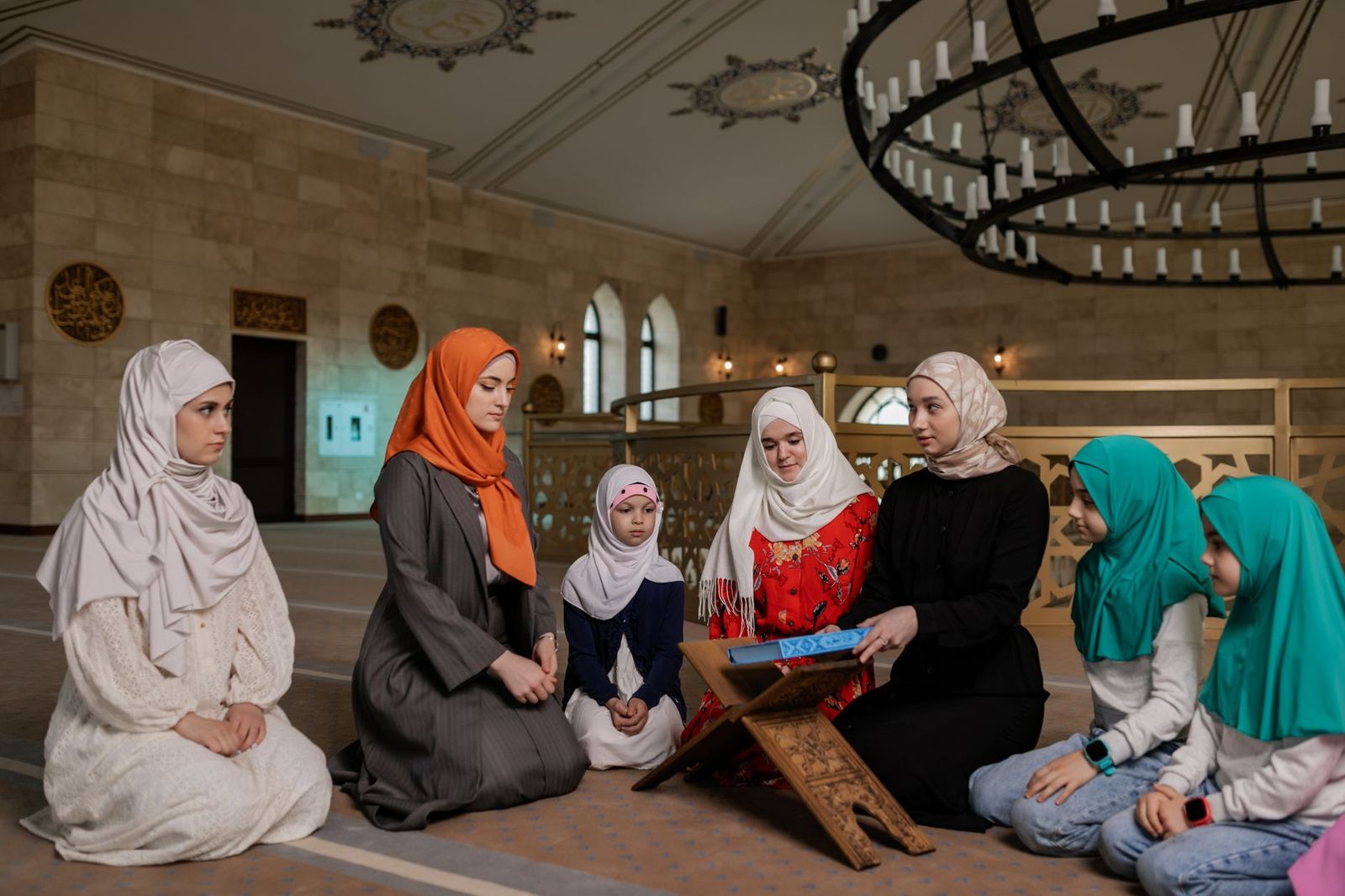
| Islamic studies circle | Quran, seerah, Arabic or halaqa for children, sometimes with a parents’ circle | Families who want a shared Islamic focus |
Many groups begin as a social meet-up and add classes as trust grows.
Step 3: Set the structure and roles
Write down who does what. Shared roles stop one person from carrying everything.
- Coordinator. Keeps the calendar, sends reminders, is the first contact.
- Treasurer. Collects and tracks any money, and shows the books to members.
- Venue lead. Books the space, opens and locks up, handles any agreement with the host.
- Class leads. One parent per class, with a helper for each.
- Welcome and safety lead. Greets new families, keeps contact details and any medical notes.
- Prayer lead. Plans the prayer break, wudu space and a simple order for children.
Roles can rotate each term. Rotating helps avoid burnout and keeps the group fair.
Step 4: Choose a venue
| Venue | Advantages | Things to check |
|---|---|---|
| Masjid or Islamic center | Prayer space, wudu facilities, community link | Is a room free in the daytime? Who is responsible for the space? Is there a written agreement? |
| A home (rotating) | Free, relaxed, easy to start | Space limits, insurance and neighbors, and the burden on the host |
| Community hall, library room or similar | Neutral, often affordable | Booking rules, hire cost and whether prayer can happen on site |
If you use a masjid, talk to the committee early. Explain what the co-op is, how many children come, when and what you need. Put what is agreed in writing, even a short email. If you use a venue that is not a masjid, check the rules for hire and whether you need any insurance or permits. Ask the venue directly, and check your local rules.
Step 5: Write a simple policy list
A one-page list prevents most arguments. Share it before families join. A starting list:
- Purpose. One sentence on what the co-op is for.
- Who can join. Ages, number of families, and any expectations of parents.
- Parent presence. Whether parents stay, and who supervises each class.
- Safety. Contact details for each family, who may collect each child, medical needs and allergies, and what happens in an emergency. Ask about any checks that local rules or the venue require for adults working with children.
- Health. Children stay home when unwell.
- Behavior. What is expected of children and adults, and what the steps are if there is a problem.
- Prayer and food. Where and when prayer happens, and food rules (for example, halal food and nut-free).
- Mixed-gender classes and supervision. How classes are organized, and which adults supervise each one.
- Photos. No photos of other people’s children without permission.
- Money. What is charged, what it covers and how refunds work.
- Leaving and changes. How a family leaves, and how the policies are changed (for example, by a group vote).
Keep it short and plain. Review it at the end of each term.

Step 6: Plan a first term
Start with a short term. Ten weeks is long enough to see if it works and short enough to adjust. Below is a sample grid for a group that meets once a week for a morning. Treat it as a template, not a rule.
| Time | Activity |
|---|---|
| Arrival | Greetings, settle in |
| Block 1 | Quran circle or Arabic, by age group |
| Block 2 | Class led by a parent (science, art, geography, writing) |
| Break | Snack and play |
| Dhuhr | Prayer together, with wudu help for the youngest |
| Block 3 | Project, games or read-aloud |
| Closing | Tidy up, a short dua, announcements |
And a 10-week term plan to go with it:
| Week | Theme | Notes |
|---|---|---|
| 1 | Meet and set up | Welcome, rules together, name tags, a simple game |
| 2 | Quran and manners | First class rotation begins |
| 3 | Science: living things | Nature walk or simple experiment |
| 4 | Writing and storytelling | Stories of the Prophets or a family story |
| 5 | Art and geometry | Patterns, calligraphy practice |
| 6 | Mid-term check | Short parent feedback, adjust the plan |
| 7 | History or geography | Map work and a project |
| 8 | Service project | Letters, a food collection or a tidy-up at the masjid |
| 9 | Show and share | Children present what they learned |
| 10 | Wrap-up and plan | Celebrate, collect feedback, decide on next term |
Adapt it to your ages, your venue and the prayer times in your area. For a sample day with prayer times, see the daily routine guide.
Step 7: Handle money and fairness
Money is a common source of friction. Be open from the start.
- Charge only what you need. Cover venue hire, supplies and any outside teacher.
- Write down what the fee covers. And what it does not.
- Keep a simple record. Who paid, what was spent and what is left. Share it each term.
- Share the work, not only the money. Parents who teach, set up or clean up may pay less or nothing, if the group agrees. Decide before the term, not during.
- Be kind about hardship. Agree in advance how families who cannot pay the full amount can still take part, for example with extra help in place of a fee.
- Keep it separate from personal money. Use a clear account or shared record rather than one person’s wallet.
- Do not collect more than you need. If you handle significant sums, check what your local rules say about groups that take money.

Keeping the group healthy
- Check in after each term. Ask what worked and what did not.
- Rotate jobs. Do not let one person carry everything.
- Welcome differences. Families will differ in practice and views. Agree what the group teaches together, and leave the rest to each home.
- Handle problems early and privately. A quiet word is usually better than a group message.
- Know when to pause. A short break is better than a group that fades out.
What to do next
- Ask at your masjid and online whether a group already exists nearby.
- If not, talk to three or four families this week.
- Draft your one-page policy list.
- Plan a ten-week first term.
If you are still planning your first year, read how to start Muslim homeschooling and the advice for new homeschoolers.
Common questions
What is a homeschool co-op?
A co-op is a group of homeschooling families who meet regularly to share classes, activities or teaching. Parents usually take part in running it.
How often does a co-op meet?
It varies. Many meet one day a week, and some meet less often or only in short terms. Pick a rhythm your families can keep.
Do I need a masjid to host a co-op?
No. Groups meet in masjids, community halls, libraries, churches or community centers that rent space, and in homes. Each has trade-offs, covered below.
How many families do I need to start?
A few families is enough to begin. Small groups are easier to organize, and you can grow later.