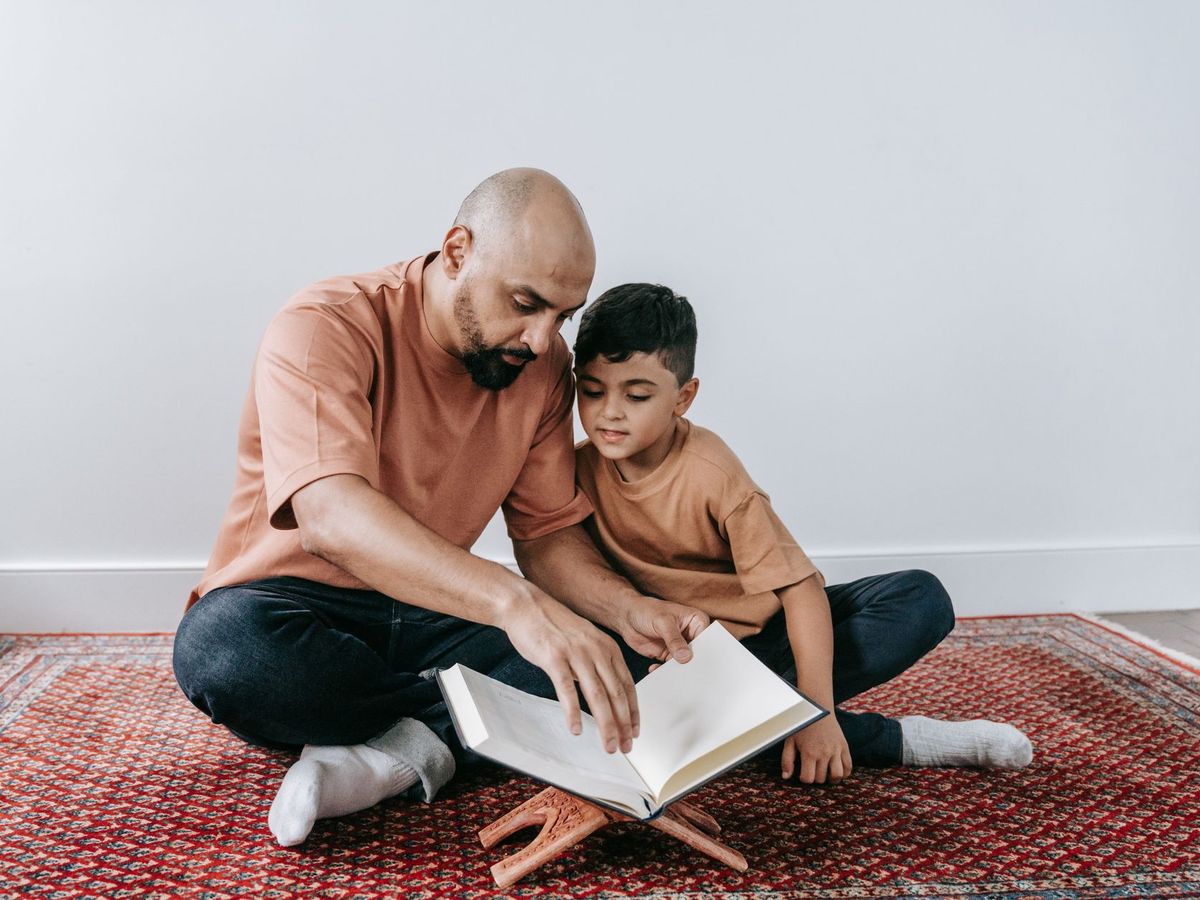
Arabic is the subject families most often put off, because many parents do not speak it. That is fine. A short daily routine and a graded program take a beginner a long way. This page helps you choose a path, matches verified providers to ages, and gives a weekly routine.
Two paths: Quranic Arabic and Modern Standard Arabic
Think of these as two goals, not two enemies. Many families do both over time.
| Quranic Arabic | Modern Standard Arabic | |
|---|---|---|
| Goal | Read the Quran correctly and understand its words | Read, write and speak the Arabic used in books, news and formal speech |
| Starts with | Letters, vowel marks, reading the Quran | Letters, everyday words, simple sentences |
| Good when | Quran reading and prayer are the priority | Your child may travel, study or work in Arabic |
| Risk | May leave speaking and everyday reading weak | May delay Quran reading unless you pair it with a Quran path |
Neither is better. Choose the one that matches your family’s goal this year, and revisit it each year. Our Quran homeschool plan covers the Quran side in more detail.
What the verified providers offer
We read each provider’s own site. This is what each says it offers, not how well it teaches.
| Provider | What it offers for Arabic | Format | Fits |
|---|---|---|---|
| IQRA’ | Arabic Language Program and a Pre-School and Kindergarten program; Arabic Reader textbooks | Young children, school-style sequence | |
| Noorart | Arabic curriculum levels from Pre-K to 2nd level, elementary (Pre-K to 6th level), middle and high school, college and university | Levels from Pre-K to university | |
| Safar Publications | Learn Arabic, and Learn to Read (Qaidah and Tajweed) | Print and online | Children who also need Quran reading |
| Goodword Books | Arabic learning books for children | Supplementary reading. Goodword also lists Islamic School Books, an Islamic Studies range and Madinah Arabic Readers; we have not checked whether these are graded | |
| Bayyinah | Arabic course to read Arabic letters and basic texts, starting from scratch; Quran study | Online | Learners starting from scratch with a Quran focus |
| Madinah Arabic | One-to-one online Arabic and Quran lessons, a trial lesson (its booking form asks for a trial fee), free Arabic courses | Live online | Any age, especially when you need a live teacher |
| Zaid Academy | Online live Arabic classes with Quran and Islamic studies | Live online | Families who want a live teacher |
| Mishkah University | Arabic for non-speakers; also a high-school certificate program (a university, not K-12) | Online | Older learners |
What to use at each age
These are examples. Check each provider’s own pages for the level that fits your child.
- Ages 4 to 6. Letters and sounds, from a Pre-K level (Noorart or IQRA’ Pre-School and Kindergarten). Add Goodword or other picture books. Keep sessions to 10 to 15 minutes.
- Ages 7 to 9. Reading and writing. Use a graded print program such as Noorart, IQRA’ or Safar. If you want Quran reading in the same system, Safar has a Qaidah and Tajweed series.
- Ages 10 to 12. Grammar basics and longer reading. Continue the same print track, and add a live teacher for speaking or pronunciation if you can.
- Ages 13+. Choose a goal. For Quran, look at Bayyinah’s courses. For general Arabic, look at Madinah Arabic’s one-to-one lessons or Mishkah’s Arabic for non-speakers.
Do not switch programs often. Finish a level before you compare alternatives, because each series builds on its own earlier books.

A weekly Arabic routine for a parent who does not speak Arabic
For example, a family with a 7-year-old and a 10-year-old might use this routine, with 20 minutes of Arabic on four days. You do not need to know Arabic to run it. You need the program’s teacher guide or answer key.
- Monday: new lesson. Read the lesson together. Say each letter or word aloud and have your child repeat it. Use the audio if the program has any.
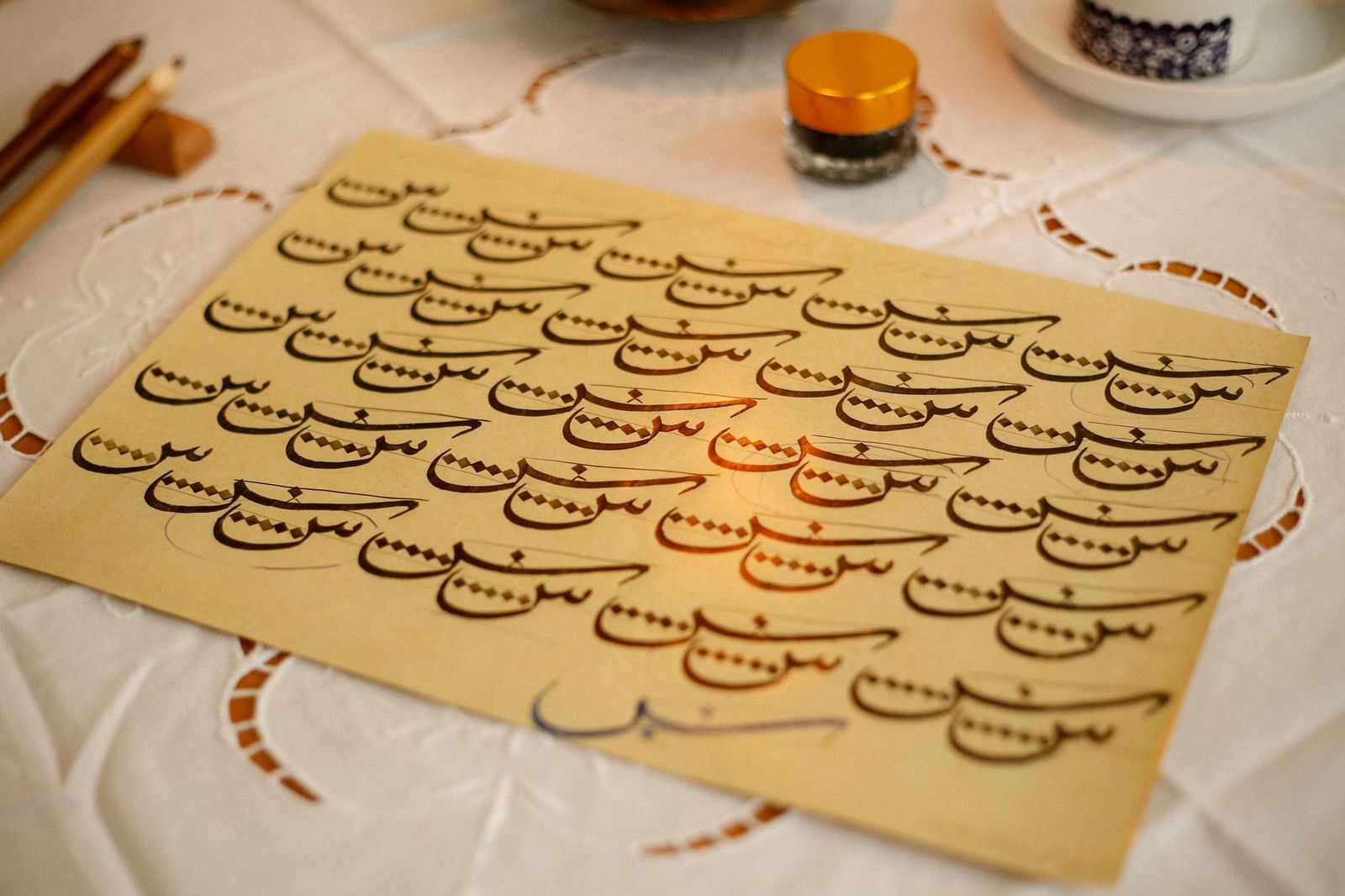
- Tuesday: writing. Your child copies the new letters or words slowly in a notebook. Check shapes against the book, not your memory.
- Wednesday: review. Flash cards or a quiz page. If you use a free site such as Madinah Arabic’s free content, use its quizzes and vocabulary pages.
- Thursday: reading. Read aloud from the book or a short Quran verse your child has already learned, while you follow along in the text.
- Friday: rest or light review. Play a vocabulary game or listen to a recitation.
Keep a simple record: a calendar with the lesson number and a tick. If your child is more than a few lessons behind, slow down, do not skip. To fit this around prayer times, use the schedule builder.
When to hire a tutor
Consider a live teacher when:
- Your child has not moved forward for several weeks.
- You cannot tell whether pronunciation is right.
- You want speaking practice, or your child needs grammar explained by a person.
- Your child is a teen and wants to learn faster than a parent can guide.
Madinah Arabic offers a trial lesson (its booking form asks for a trial fee), which lets you see whether a teacher and style suit your child before you commit. Zaid Academy also offers live classes. Ask any provider about teacher qualifications and class size before you start, and see what other options your local masjid offers.
Common problems and how to handle them
- Child forgets letters between lessons. Shorten sessions and repeat daily. Ten minutes every day works better than an hour once a week.
- Letter shapes change by position. Many Arabic letters look different at the start, middle and end of a word. Use a chart on the wall and point to it during reading.
- Parent cannot check pronunciation. Use audio from the program, or book a trial lesson with a live teacher to check a few key sounds.
- Child loses interest. Switch the activity, not the subject: a game, a recitation, or writing a name in Arabic. Keep the daily slot.
- Two children at different levels. Do the same lesson time, with each child on their own page. Sit with the younger one first.
Questions to ask any Arabic program
- Does it say who the program is for and at what age?
- Is there a teacher guide, an answer key or audio for a parent who does not speak Arabic?
- Can you see a sample of the first lesson?
- How many levels are there, and what does the last one cover?
- Is the goal Quranic reading, modern Arabic, or both?
Choosing and sticking with a path
Progress in Arabic is slow at first and then speeds up. Expect the first months to feel like very little, and judge your plan by whether the daily habit holds, not by how many pages you finished.
- Decide your goal: Quran, modern Arabic, or both in sequence.
- Pick one program for the main track and stay with it for a full level.
- Use a free or low-cost add-on for review. See free Islamic homeschool curriculum.
- Revisit your choice once a year. For how Arabic fits next to everything else, see our Islamic homeschool curriculum comparison.
Common questions
Should my child learn Quranic Arabic or Modern Standard Arabic?
It depends on your goal. If you want your child to read and understand the Quran, choose a Quran-focused program. If you want your child to read modern texts and speak, choose a Modern Standard Arabic program. Many families start with reading the Quran, then add more.
At what age can I start Arabic?
Several providers have programs from Pre-K. Noorart lists levels starting at Pre-K, and IQRA' has Arabic and Pre-School programs. Start with letters and sounds in short sessions.
Can I teach Arabic if I do not speak it?
Yes, for the early levels, if you use a graded program with a guide and learn a little ahead of your child. For speaking and grammar, a live teacher helps.
When should I hire a tutor?
When your child is stuck for several weeks, when you cannot check pronunciation, or when you want speaking practice.