Why a plan helps
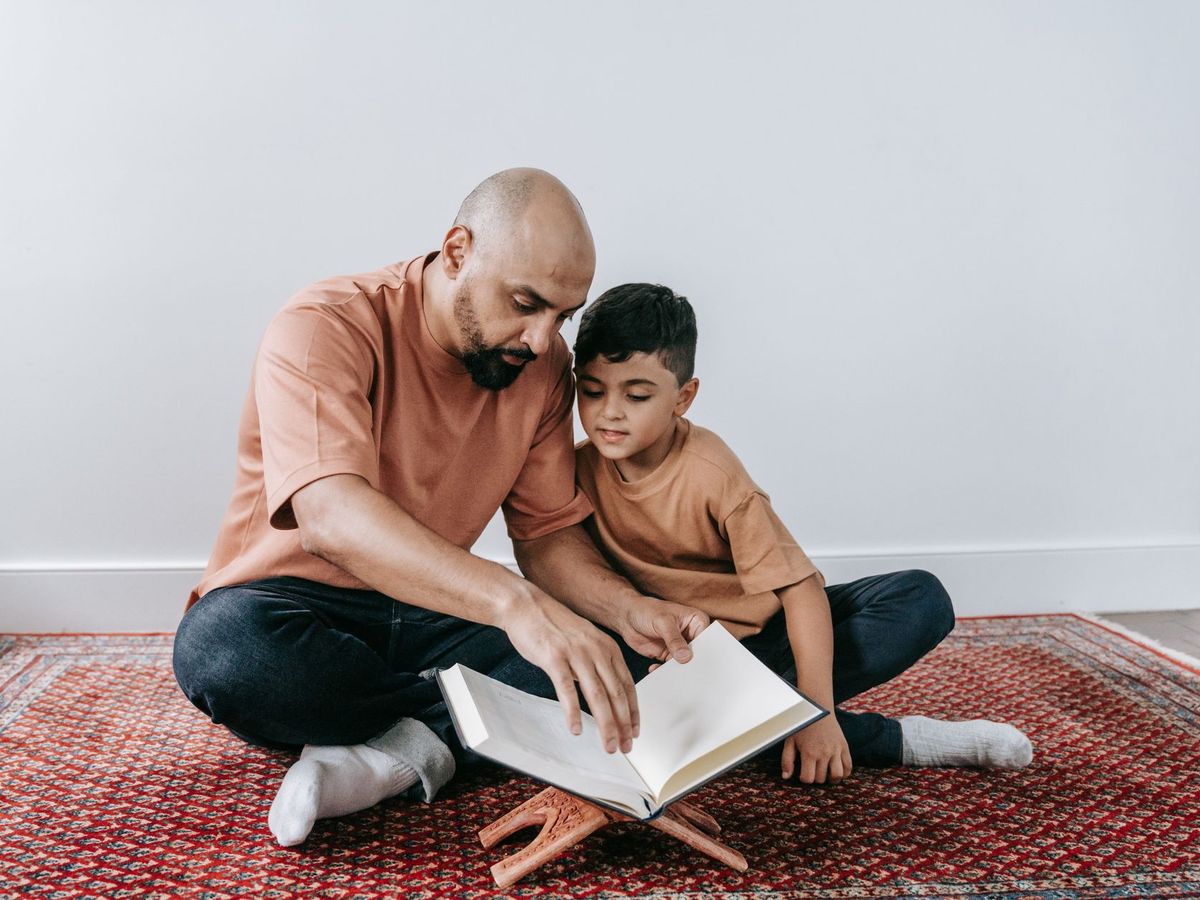
Quran study at home often starts with energy and fades after a few weeks. Usually the cause is not the child. It is the lack of a plan: no clear next step, no review, and no way to see progress.
A plan gives you three things. It tells you what stage your child is in. It limits each session to something small enough to finish. And it protects what the child already knows.
The Prophet (peace be upon him) said, in the narration recorded in Sahih al-Bukhari 5027: “The best among you (Muslims) are those who learn the Qur’an and teach it.” (Source: sunnah.com, Bukhari 5027.) That is a good reason to keep going on days when it feels slow.
The four stages
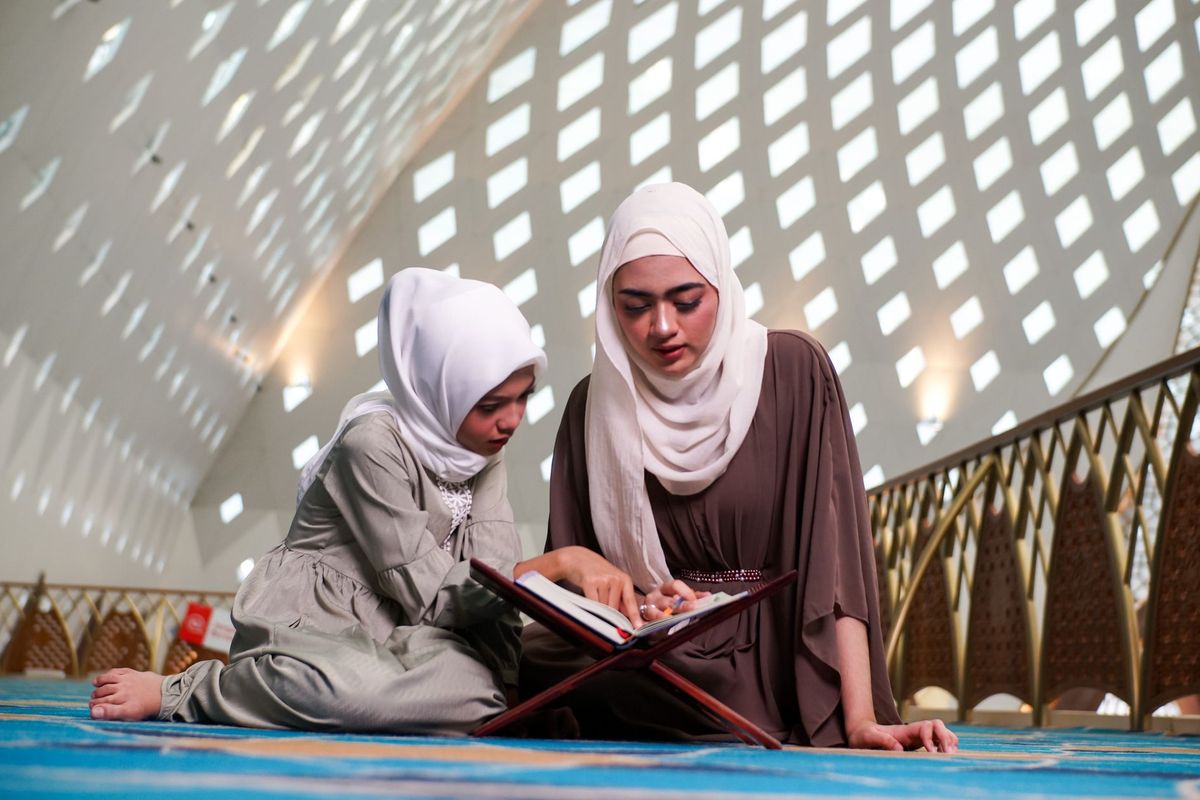
Children move through these stages at their own pace. Some stay in one stage for a year. Some move back and forth. Use the stage to decide what to teach, not to measure your child.
- Letters and reading. Arabic letters, their shapes and sounds, short vowels, joining letters into words. The goal is to sound out any line on a page, slowly.
- Fluent reading with tajweed basics. Smooth reading, correct points of articulation for the letters, and the first rules of recitation. Allah says in the Quran: “…and recite the Qur’an with measured recitation.” (Qur’an 73:4, Saheeh International, quran.com.) A teacher is most helpful here.
- Memorization. Short surahs first, then longer ones, always recited aloud to a listener who can correct mistakes.
- Revision. Not a final stage but a permanent habit that starts the day the first surah is learned.
Allah also says: “And We have certainly made the Qur’an easy for remembrance, so is there any who will remember?” (Qur’an 54:17, Saheeh International, quran.com.) Many parents find this verse a useful reminder when a child is discouraged.
Daily time by age: a suggested starting point
These ranges are a place to start, not a rule. Adjust them to your child’s attention, your household and your teacher’s advice. A short session done every day usually beats a long one done twice a week.
| Age | Suggested daily time | Focus |
|---|---|---|
| 4 to 6 | 10 to 15 minutes | Letter sounds, listening to short surahs, repeating after you |
| 7 to 9 | 15 to 25 minutes | Reading practice, first tajweed rules, a short memorization lesson |
| 10 to 12 | 25 to 40 minutes | Fluent reading, memorization, revision |
| 13 and up | 30 to 60 minutes | Memorization, revision, understanding meanings |
If you have several children, sit them together for the shared part (listening, group recitation) and give each child a few minutes alone with you or a teacher for their own lesson.
A memorization and revision system
Memorizing is the easy half. Keeping it is the hard half. This three-part system is a common one, and you can adapt it:
- New lesson (sabaq). A small amount: a few lines, or less. The child reads it with you, repeats it several times, then recites it from memory.
- Recent revision (sabqi). Review what was learned in the last several days. Recite it from memory before every new lesson.
- Older revision (manzil). Go through what was learned earlier, in sections. Divide your child’s older memorization into portions and rotate through one portion a day, so every portion is reviewed regularly.
Three habits make this work:
- Revise first, then add. Do the old material before the new lesson, while the child is fresh.
- Do not add until the last lesson is solid. A shaky lesson will fall apart when the next one lands on top of it.
- Recite aloud to a listener. Mistakes in pronunciation or word order show up quickly when someone else is listening.

A tracking sheet you can copy
Progress is hard to see without a record. A simple weekly table works. Print a page per child, or draw it in a notebook.
| Day | New lesson | Recent revision | Older revision | Notes for the teacher |
|---|---|---|---|---|
| Saturday | ||||
| Sunday | ||||
| Monday | ||||
| Tuesday | ||||
| Wednesday | ||||
| Thursday | ||||
| Friday |
In the “Notes” column, write only what a teacher would want to know: a word the child keeps mixing up, a letter that sounds wrong, a verse that needs more work. Our printable homeschool planner has room for a Quran tracker next to the weekly plan.
Fitting Quran into the day
Many families do Quran first, after Fajr or right after breakfast, while the house is quiet and the child is alert. Others prefer a block after Dhuhr. Either works. What matters is that it happens at the same time each day, so it becomes part of the rhythm.
For Ramadan, when most families raise the Quran goal and lighten everything else, see the Ramadan homeschool plan. Our sample daily routines show where a Quran block can sit around the prayers, and the schedule builder lets you place it on a weekly grid around your local prayer times.
When to get a teacher
You can do a lot yourself. Get a qualified teacher when:
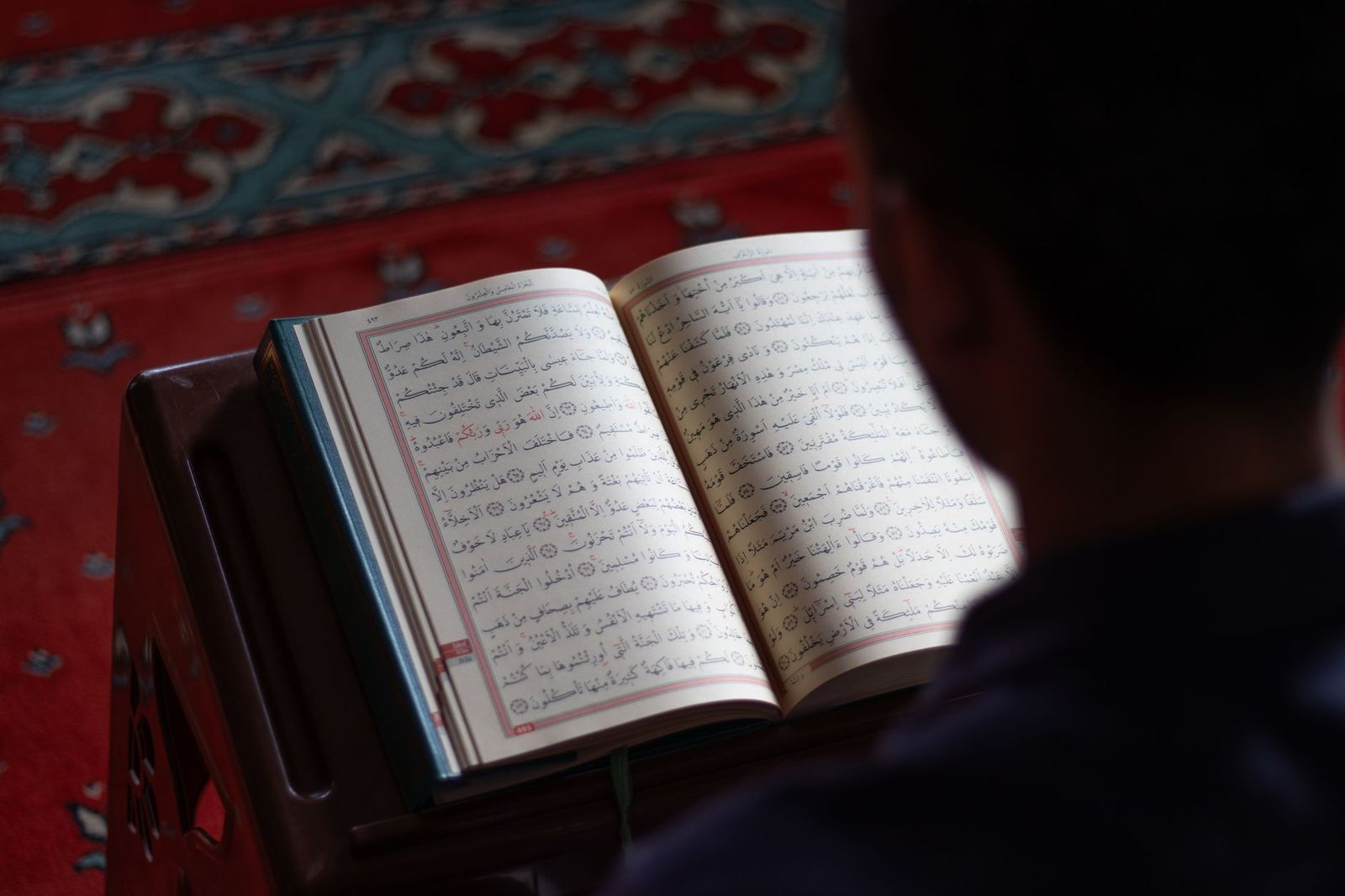
- You cannot judge pronunciation. Tajweed is about sounds that are easy to get slightly wrong. A teacher hears what you may not.
- Your child has plateaued. A fresh voice often helps more than a new method.
- You want to start a longer memorization program. A teacher can set the pace and check the revision.
- You are not yet confident reading Arabic yourself. It is fine to learn alongside your child, but do not be the only check on recitation.
When you look for a teacher, ask which teacher trained them, how they correct mistakes, and whether they work with children. Ask for a short trial lesson. Different teachers follow different recitation traditions and teaching styles, so check that the one you choose fits what your family follows. If you are unsure, ask your local imam.
Online teacher or local teacher?
| Online teacher | Local teacher | |
|---|---|---|
| Choice | Wide, often across time zones | Limited to your area |
| Scheduling | Flexible, easy to move lessons | Fixed times, travel needed |
| Correction | Depends on audio and video quality | Easier to hear and see the mouth |
| Child’s focus | Needs a quiet spot and a parent nearby for younger children | Often easier for young children |
| Community | Less contact with other families | A chance to meet other Muslim families, sometimes a masjid class |
Many families use both: a local class for community and an online teacher for one-to-one tajweed. For children under about eight, a parent should sit in on online lessons.
Common problems and quick fixes
- The child resists. Shorten the session, keep the time fixed, and end on something they can do well.
- Old surahs are slipping. Pause new memorization for a week or two and do only revision.
- Mixed-age children. Use a shared recitation time for the youngest, and individual slots for older children.
- Busy weeks. Keep a minimum: a few minutes of revision. Do not skip the whole day.
Where this fits in your overall plan
Quran study is one part of an Islamic homeschool. Read about teaching salah to children, which pairs naturally with learning short surahs, and see our guide to Arabic homeschool curriculum if you want your children to understand what they recite.
Common questions
How much Quran should a homeschooled child do each day?
There is no fixed rule. Many families start with short daily sessions and lengthen them as the child grows. The table on this page is a starting point to adjust, not a requirement.
Can parents teach Quran at home without a teacher?
Parents can teach letters, short surahs and daily revision. For tajweed (the rules of recitation), many families find a qualified teacher valuable, because correct pronunciation is hard to judge by ear alone.
Should we learn to read Arabic before memorizing?
Many programs teach the letters and basic reading first, so a child memorizes from the page with correct sounds. Some children memorize short surahs by ear at the same time. Ask your teacher which order suits your child.
How do we stop memorized surahs from fading?
Revise on a schedule. A common pattern is: one new lesson, a review of the last few days, and a rotation through older material. See the revision system below.