What the sources say about teaching children to pray
In Sunan Abi Dawud 495, Abdullah ibn Amr ibn al-As reports that the Messenger of Allah (peace be upon him) said: “Command your children to pray when they become seven years old…” (Source: sunnah.com, Abu Dawud 495.) Sunnah.com shows the grading Hasan Sahih (Al-Albani) for this narration. Sunan Abi Dawud 494, narrated by As-Saburah, carries a similar instruction for a boy of seven and shows the same grading.
The same narrations continue with further instructions for when the child reaches ten. Read the full text on sunnah.com and ask a knowledgeable teacher how scholars understand it. We do not give rulings here. This page is about the practical side: how to make prayer familiar and welcome long before seven, and steady after it.
The Quran also says: “And enjoin prayer upon your family [and people] and be steadfast therein.” (Qur’an 20:132, Saheeh International, quran.com.) Notice that it asks the parent to be steadfast too. Children copy what they see.
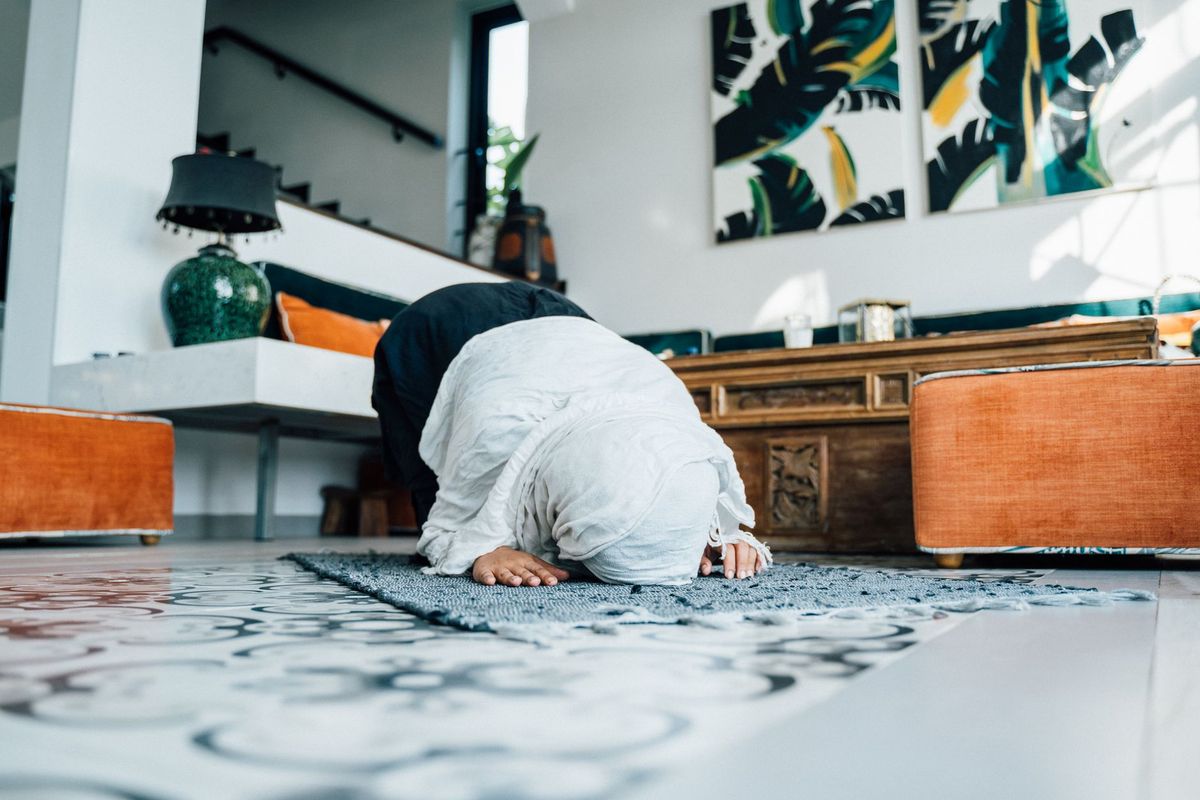
Step by step, by age
Treat these as stages, not deadlines. Some children are ready early and some need more time. Where schools of thought differ on a detail, ask your local imam or teacher.
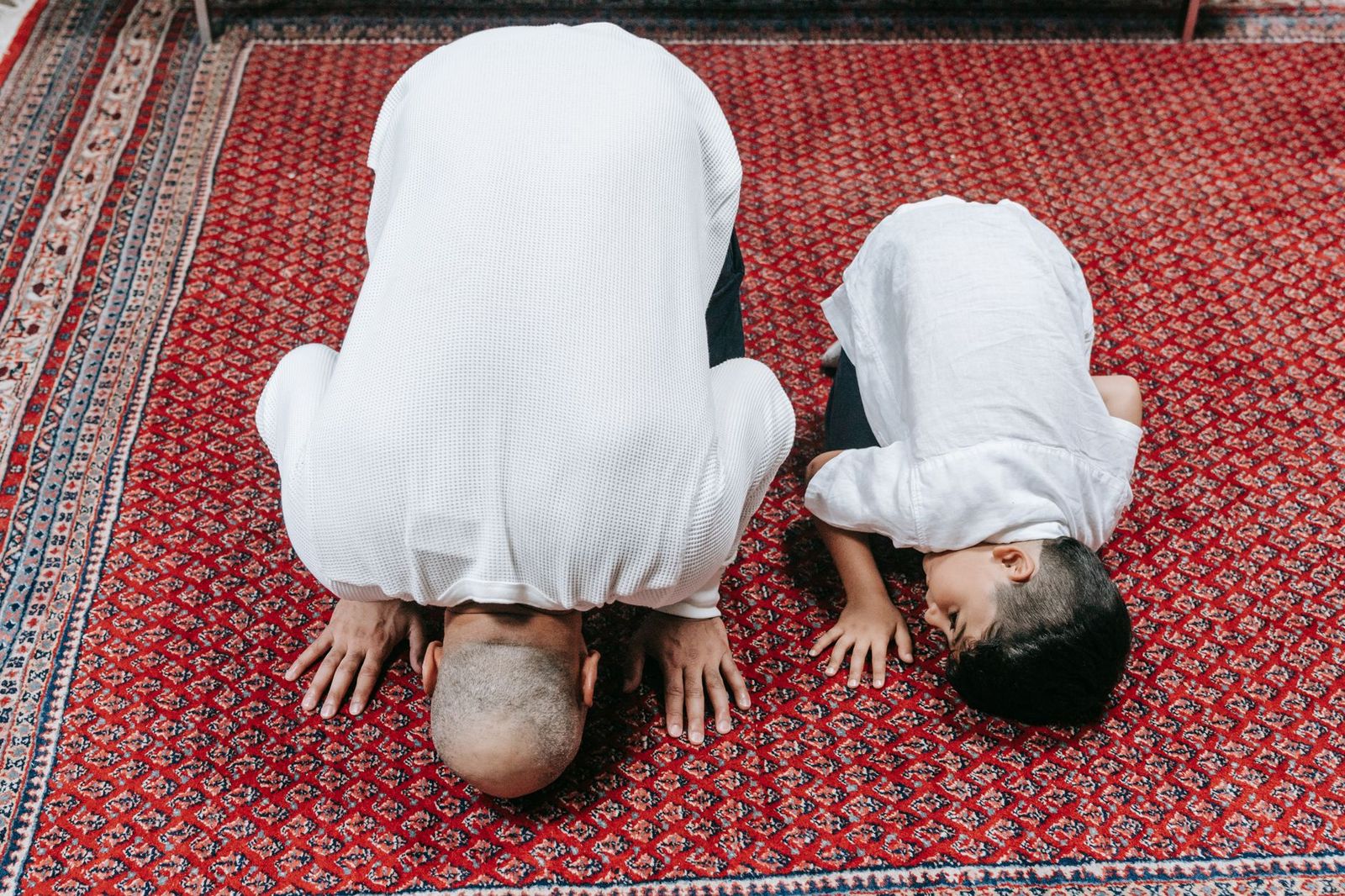
Ages 2 to 4: Watch and join in
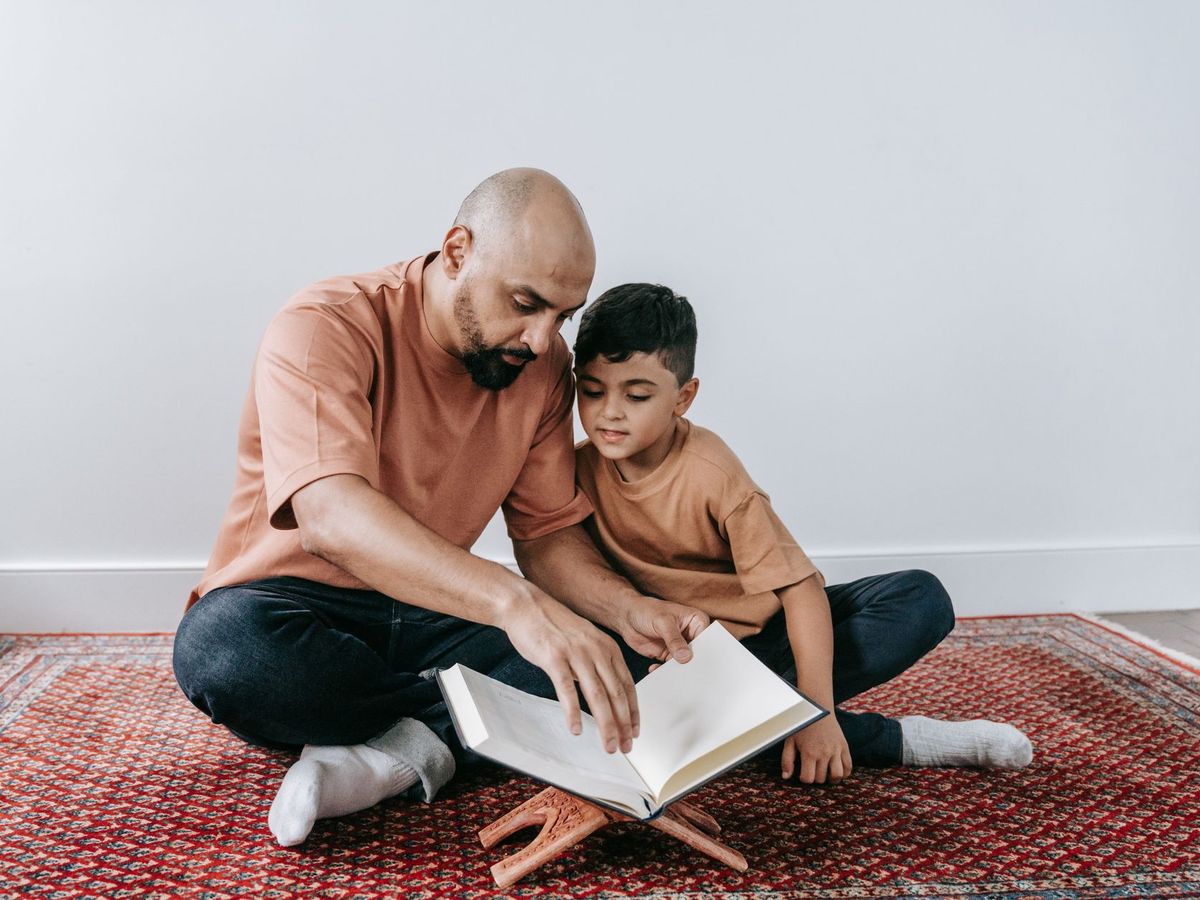
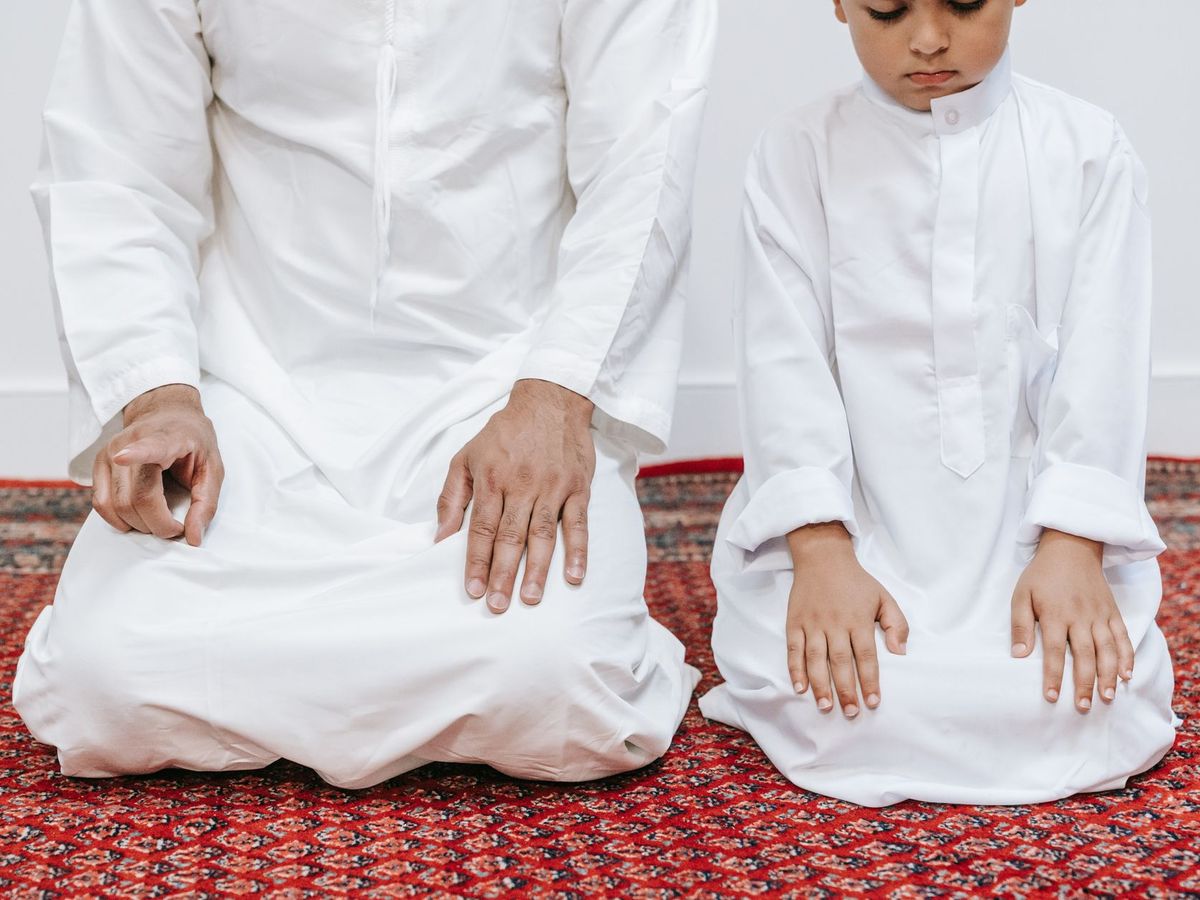
- Let your child stand or sit beside you on the mat. Do not expect them to copy exactly.
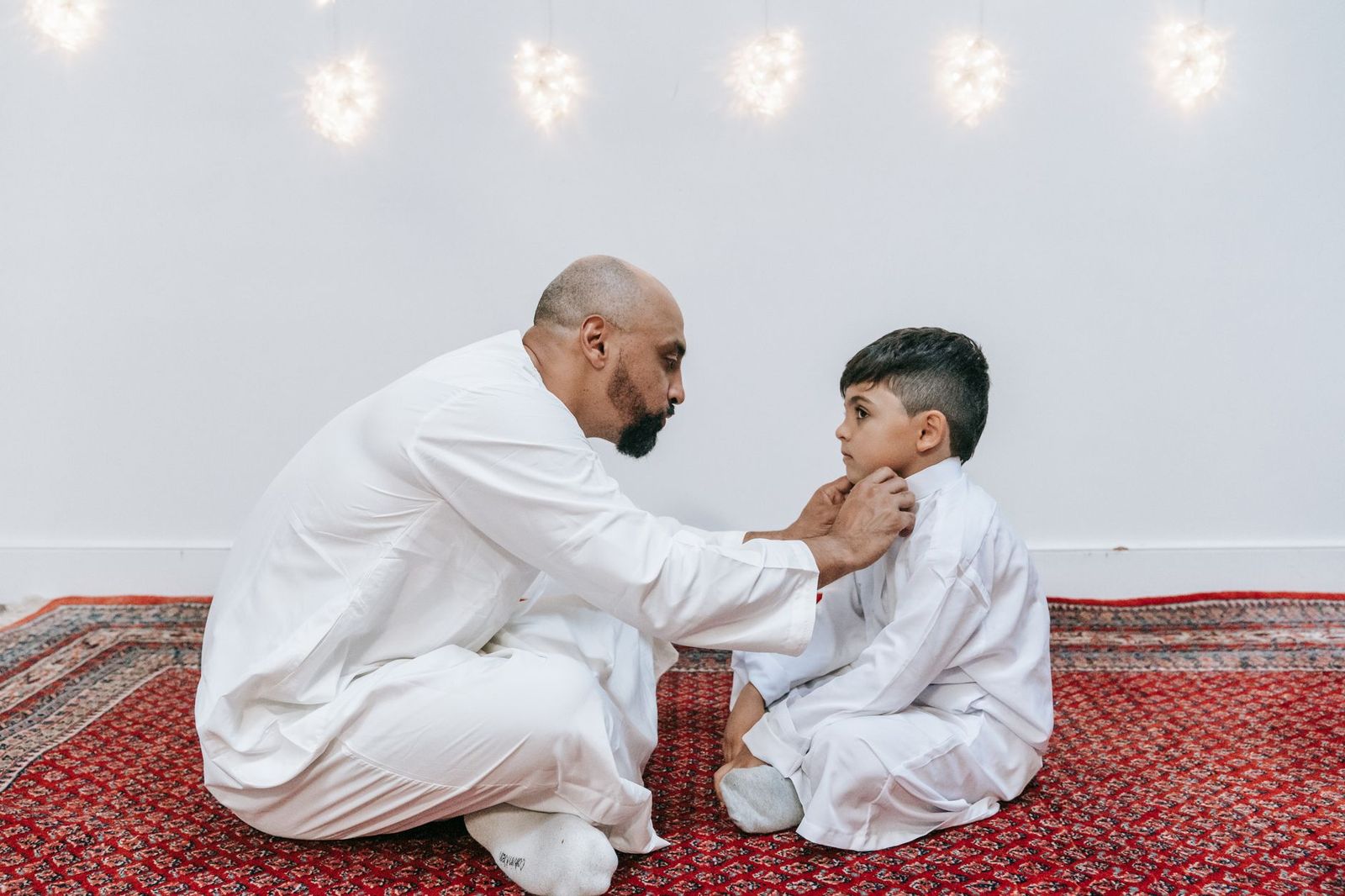
- Give them their own small mat and a prayer-time routine: wash hands, put on a scarf or cap if your family does so, join the line.
- Say the adhan phrase “Allahu Akbar” together as a game. Keep it light.
Ages 5 to 6: Learn the parts
- Teach one part at a time: the standing, the bowing, the prostration, the sitting. Practice the movements without the words.
- Add the words slowly. Start with the short surahs your child already knows from Quran practice.
- Practice one prayer a day with you, usually Maghrib or Dhuhr.
Age 7: Start praying as a routine
- This is the age mentioned in the hadith above. Many families now encourage the child to join the prayers regularly, still with patience and help.
- Use a chart (see below) and praise effort, not perfection.
- Review the basics of wudu and the order of the prayer once a week.
Ages 8 to 10: Build consistency
- Aim for the child to pray the day’s prayers with the family, with a parent checking the details from time to time.
- Teach the meaning of what they say. Even one line a week makes the prayer more present.
- Practice making up for a missed prayer calmly, without shame. Ask your local imam or teacher about the details.
Ages 11 to 12: Own it
- Let the child take charge of their own routine: set their own reminders, check prayer times, ask for help when needed.
- Talk about concentration (khushu) and what helps: a quiet spot, a clear mind, slow movements.
- Prepare them for what changes as they grow older. Ask your local imam or teacher about the specifics that apply to your family.
Teaching wudu
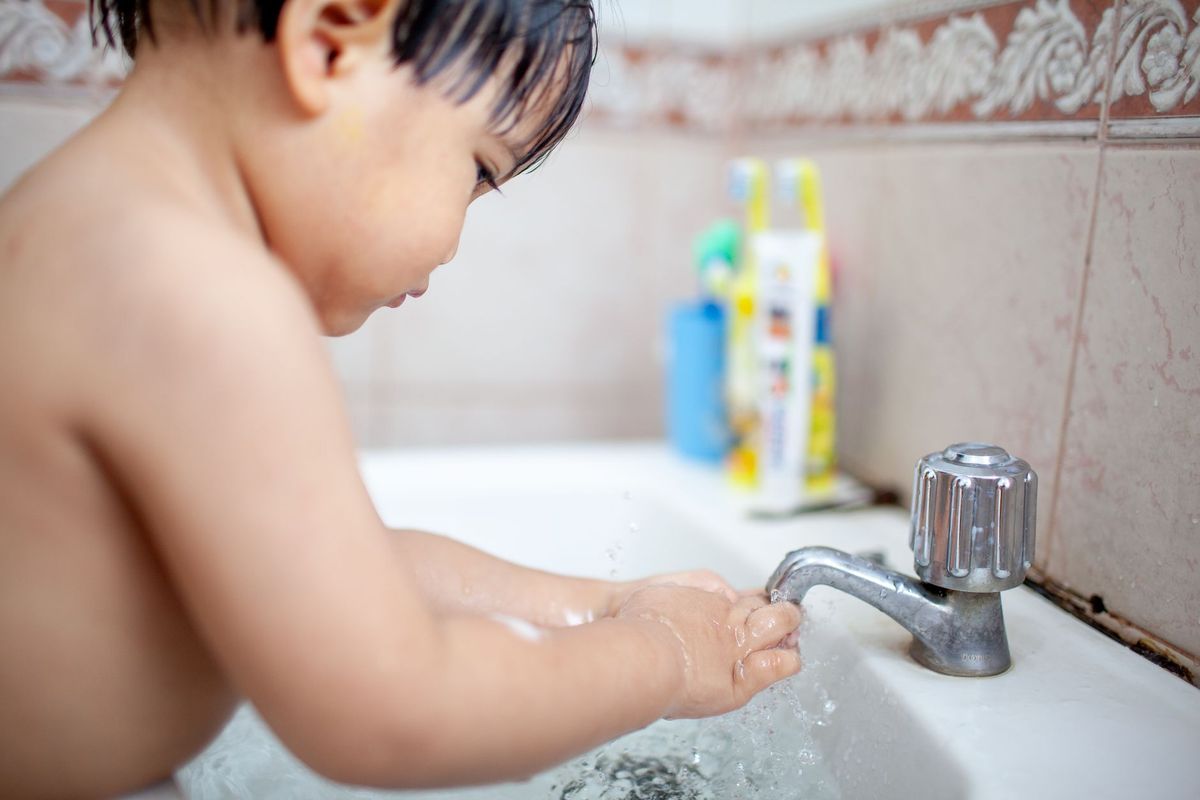
Wudu is the first thing a child needs to learn after the basic movements. Allah describes it in the Quran: “O you who have believed, when you rise to [perform] prayer, wash your faces and your forearms to the elbows and wipe over your heads and wash your feet to the ankles.” (Qur’an 5:6, Saheeh International, quran.com.)
Schools of thought differ on some details of wudu, such as what is recommended and what breaks it. Ask your local imam or teacher which method your family follows, and teach that one consistently.
A practical way to teach it:
- Show it first. Do your own wudu slowly, naming each step.
- Do it together at the sink, with a stool for small children.
- Use a picture card in the bathroom showing the order of the steps your family follows.
- Let the child lead while you watch, then correct gently at the end.
Building prayer into the homeschool day
Prayer times move with the seasons, so the school day moves with them. A few ideas that work:
- Use prayer as the break. Dhuhr and Asr are natural breaks between lessons. Children who know a bell is coming can finish their work calmly.
- Pray together. Even if only one parent is home, pray as a family at the same time each day.
- Keep the mat ready. A rolled mat in a fixed spot saves time and arguments.
- Link wudu to a signal. For example, when the adhan alert sounds, everyone washes up.
- Check the times each week. Our schedule builder lays a school week around your local prayer times, and our daily routine page has sample days for different ages.
Practice routines that work
- Five-minute practice. After lunch, practice one part of the prayer: for example, the bowing and the words said in it.
- Teach-the-parent game. Let the child “teach” you the prayer. Teaching reveals what they know and what they do not.
- Visual card set. Make cards for each movement and have the child put them in order.
- Memory pairing. Pair a new prayer phrase with a short surah the child already knows.
- Family prayer after Maghrib. A short, fixed time that the whole family keeps.
A weekly progress table
Use this table to see where each child is. Tick or write a short note. Review it on Friday. Print one per child, or copy it into your printable planner.
| Prayer | Mon | Tue | Wed | Thu | Fri | Sat | Sun |
|---|---|---|---|---|---|---|---|
| Fajr | |||||||
| Dhuhr | |||||||
| Asr | |||||||
| Maghrib | |||||||
| Isha | |||||||
| Wudu done alone |
Under the table, add one line each week: “This week we worked on…” and “Next week we will work on…” That keeps the plan moving.
When progress is slow
- Resistance: Shorten the session and make it more pleasant: a favorite mat, a small reward in the form of time with you. Do not turn prayer into a punishment.
- Forgetfulness: Use a visual chart on the wall.
- Different levels among siblings: Pair an older child with a younger one as a helper.
- Your own doubts: Say “let’s ask” and take the question to your local imam or teacher. Children learn that asking is part of learning.
Teaching salah takes years, not weeks. Keep it regular, kind and warm, and keep praying yourself.
A sample week for a seven-year-old
This is one way to spread practice through a week without making prayer feel like a test. Change it to suit your child.
| Day | Focus | How long |
|---|---|---|
| Monday | Wudu: do it together, child leads the last two steps | About 10 minutes |
| Tuesday | The standing part: the words, slowly | About 10 minutes |
| Wednesday | Bowing and prostration: movements and the words said in each | About 10 minutes |
| Thursday | Putting it together: pray one full prayer with a parent beside the child | One prayer |
| Friday | Review with a story or a short talk on why we pray | About 10 minutes |
| Weekend | Family prayer, no corrections, only praise | One or two prayers |
Keep a note of anything to ask a teacher, such as a word the child keeps saying differently. A local teacher or the imam can listen once and settle it, which is better than guessing.
Talking about prayer, not only doing it
Children who know why they pray tend to keep it up. Between practice sessions, try short conversations:
- Why do we wash before prayer? What does it feel like to stand in front of Allah?
- What do you like to say to Allah after the prayer? Let the child make dua in their own words.
- What does your day feel like when you have prayed on time compared with a rushed day?
Keep these talks short and curious. A child who feels listened to will ask more questions, and those questions are the best material for your next visit to the imam or teacher.
Common questions
At what age should children start praying?
The hadith in Sunan Abi Dawud 495 mentions age seven as the point to tell children to pray. Many families let younger children watch and join in before that. Details such as the age of obligation are matters to ask your local imam or teacher. For the youngest children, the [preschool guide](/ages/preschool/) shows how to introduce the Islamic part of the day in small pieces.
How do I teach a child to pray if I am still learning myself?
Learn together. Use a trusted book or a local teacher for the movements and words, practice in front of your child, and correct yourself openly. Children learn from seeing a parent keep trying.
What if my child makes mistakes in prayer?
Gentle correction after the prayer works better than interrupting. If you are unsure whether a mistake affects the prayer, ask your local imam or teacher, because schools of thought differ on some details.
Do children have to pray all five prayers during school hours?
Dhuhr and Asr fall inside most school days. Build them into the schedule as fixed breaks. Our daily routine page shows how.