
What this unit covers
The seerah is the life story of the Prophet Muhammad, peace be upon him. This unit follows it in the order it happened: birth and childhood, early adulthood and marriage, the first revelation, the years of preaching in Makkah, the Hijra, the years in Madinah, the return to Makkah, and his death.
It is built to be short and repeatable. Three or four sessions a week of 20 to 40 minutes is enough. If you teach more than one child, read the story aloud once to everyone, then split for the tasks.
The unit fits well alongside a Quran plan and sits inside a wider Islamic studies sequence. To place it in your week, use the schedule builder.

A note on sources and how we wrote this
Dates and events below follow Lings’s Muhammad: His Life Based on the Earliest Sources and al-Mubarakpuri’s The Sealed Nectar, together with the Quran and hadith texts, all listed at the bottom of the page. Historians and classical biographers differ on some early details, such as the exact year of birth, so we write “about” where they do. We have kept to events that are widely agreed.
For the Quran we quote the Saheeh International translation on Quran.com. For hadith we give the collection, the number and the grading as Sunnah.com shows it. Sunnah.com does not show a separate grade on Sahih al-Bukhari entries, so none is given for those.
If your children ask a question that goes beyond this unit, ask a trusted teacher or imam. We do not give religious rulings.
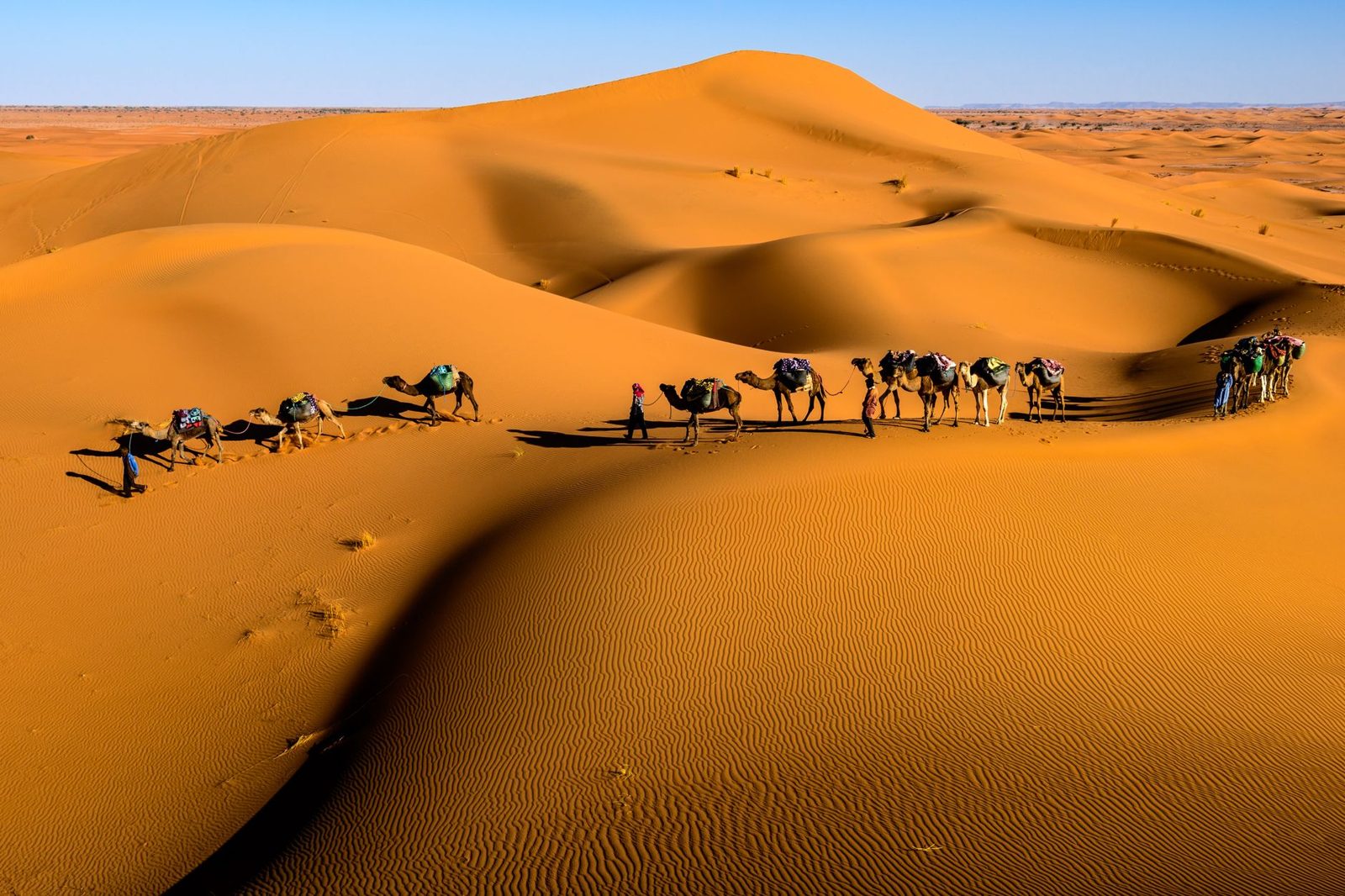
The timeline at a glance
Print this table for the wall. The dates are in the Common Era (CE).
- About 570 to 610: about 40 years from his birth to the first revelation.
- About 610 to 622: about 12 years of revelation and preaching in Makkah, ending with the Hijra.
- 622 to 632: 10 years in Madinah.
| Period | Date | Event |
|---|---|---|
| Makkah | About 570 | Muhammad is born in Makkah. His father, Abdullah, died before his birth. |
| Makkah | Childhood | His mother, Amina, died when he was six. His grandfather cared for him until he died, then his uncle Abu Talib. |
| Makkah | As a young man | He works as a merchant and is known as al-Amin, “the trusted one”. |
| Makkah | 595 | He marries Khadijah. |
| Makkah | About 610 | The first revelation comes in the cave of Hira. |
| Makkah | About 613 | He begins to preach openly. |
| Makkah | 619 | Khadijah dies. |
| Hijra | 622 | He moves with his followers from Makkah to Madinah. The Islamic calendar starts here. |
| Madinah | 625 and 627 | The battle of Uhud (625) and the defense of Madinah with a trench (627). The earlier battle of Badr is also part of this period. |
| Madinah | 628 | A ten-year truce is agreed with Makkah after the group travels for pilgrimage. |
| Madinah | January 630 | He enters Makkah, and the city is taken without a fight. |
| Madinah | June 8, 632 | He dies in Madinah. |
The first revelation and the start of open preaching are dated “about” because the sources give approximate years. The other dates follow Lings and al-Mubarakpuri, listed under sources.
Weekly plan
| Week | Focus | Anchor text | Main task |
|---|---|---|---|
| 1 | Birth, family and childhood | Qur’an 93:6-8 | Family tree of the Prophet’s household |
| 2 | Al-Amin: character before prophethood | Qur’an 68:4 | Honesty chart for the week |
| 3 | The cave of Hira and the first revelation | Qur’an 96:1-5 and Sahih al-Bukhari 3 | Draw and label the cave scene |
| 4 | Preaching in Makkah | Qur’an 33:21 | Read about patience, then a “steady kindness” task |
| 5 | The Hijra | Qur’an 9:40 and Sahih al-Bukhari 3906 | Map the move from Makkah to Madinah |
| 6 | Building the community in Madinah | Qur’an 21:107 | Plan a neighborhood good-deed week |
| 7 | The return to Makkah | Review of weeks 5 and 6 | Timeline build, part one |
| 8 | His character, his death, and review | Jami at-Tirmidhi 3895 | Timeline build, part two, and a family quiz |
Week by week
Week 1: Birth and childhood
Tell the story of his birth in Makkah, the loss of his father before his birth, his mother when he was six, and his care by his grandfather and uncle. Read Qur’an 93:6-8 (Saheeh International): “Did He not find you an orphan and give [you] refuge? And He found you lost and guided [you], And He found you poor and made [you] self-sufficient.”
Week 2: Al-Amin
Talk about trust. As a young man he worked as a merchant and was known as al-Amin, “the trusted one”. Read Qur’an 68:4: “And indeed, you are of a great moral character.” Children keep a small honesty chart for the week.
Week 3: The first revelation
Read the account in Sahih al-Bukhari 3, narrated by Aisha. It tells of the cave of Hira, the angel’s first words, and how Khadijah comforted him. The first words revealed are in Qur’an 96:1-5 (Saheeh International): “Recite in the name of your Lord who created.” Keep this week quiet and slow. Younger children can hear a short retelling. Older children can read the hadith text itself.
Week 4: Preaching in Makkah
After the first revelation, Khadijah was the first to accept Islam, and about 613 he began to preach openly. His own tribe guarded the Kaaba, so the message was hard on them. Read Qur’an 33:21: “There has certainly been for you in the Messenger of Allah an excellent pattern for anyone whose hope is in Allah and the Last Day and [who] remembers Allah often.”
Week 5: The Hijra
Read Qur’an 9:40, which mentions the two men in the cave: “Do not grieve; indeed Allah is with us.” Then read Sahih al-Bukhari 3906, in the part narrated by Urwa ibn al-Zubayr, which tells how the people of Madinah waited each morning for his arrival. The move took place in 622.
Week 6: Madinah
In Madinah he led a new community. Read Qur’an 21:107: “And We have not sent you, [O Muhammad], except as a mercy to the worlds.” Talk about what mercy looks like at home and in the neighborhood.
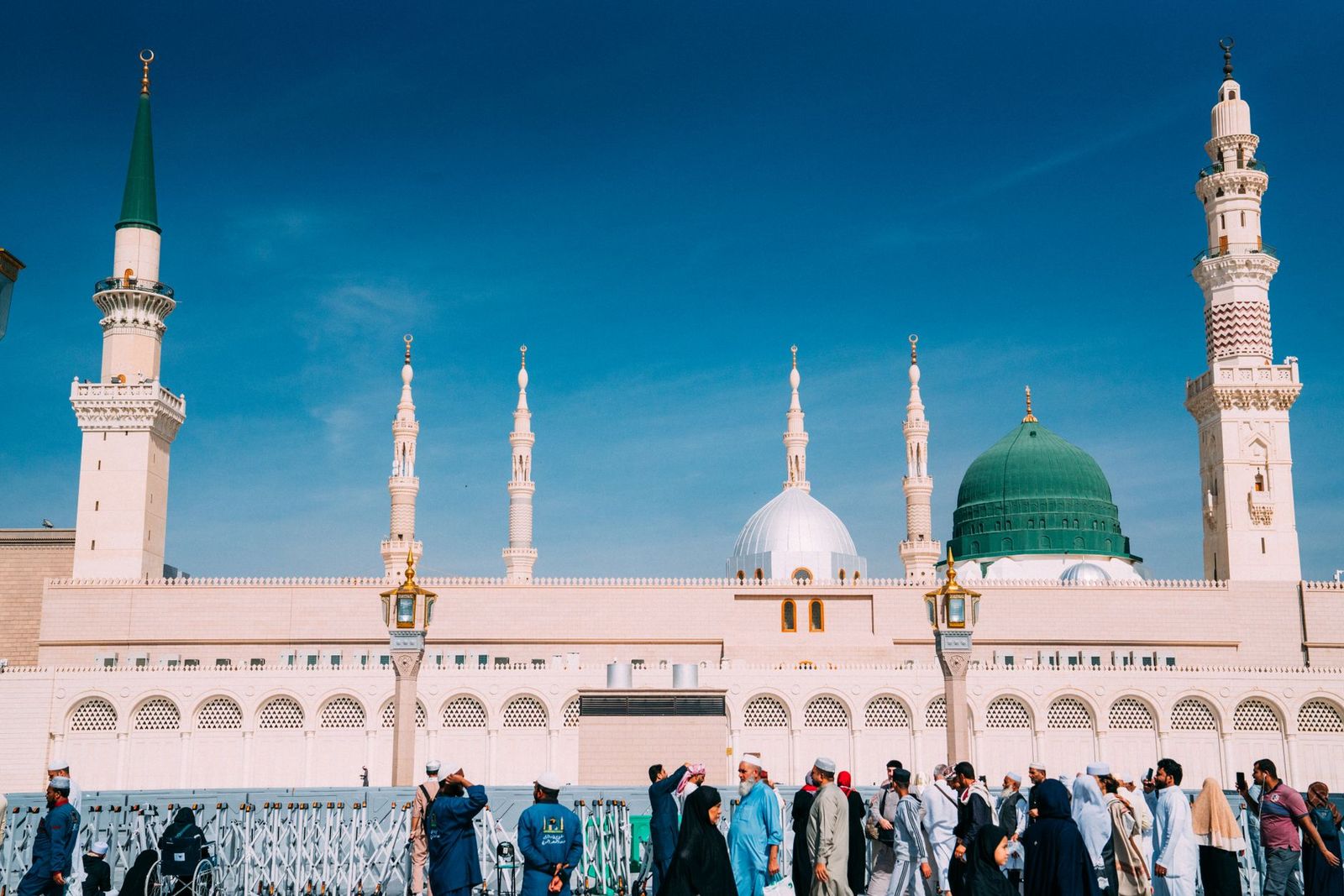
Week 7: The return to Makkah
Cover the years of conflict briefly and calmly, with the age of the children in mind. In 628 a ten-year truce was agreed. In January 630 he entered Makkah following the dates in Lings and al-Mubarakpuri.
Week 8: Character and farewell
He died in Madinah on June 8, 632. Read Jami at-Tirmidhi 3895 (graded Sahih by Darussalam on Sunnah.com), narrated by Aisha: “The best of you is the best to his wives, and I am the best of you to my wives.” Ask what it says about how he treated his family.

Activities for ages 5 to 8
- Story and draw. Read a short retelling aloud, then each child draws one scene and says one sentence about it.
- Honesty and kindness charts. Track one kind or honest act a day for a week.
- Cave and tent play. Build the cave of Hira from blankets for a quiet reading corner.
- Name the people. Use cards for Khadijah, Abu Bakr, Abu Talib and others. Match each to one fact.
- Simple map. Draw two dots for Makkah and Madinah and a line for the move.
- Sing and repeat. Learn the order: Makkah, Hijra, Madinah.
Activities for ages 9 to 13
- Source reading. Read the Bukhari 3 and 3906 hadith texts in full and write three questions about each.
- Timeline with evidence. For each entry on the timeline, write the source it came from.
- Compare two retellings. Read a chapter from a full biography and compare it with the dates in Lings or al-Mubarakpuri. Note where they differ and why.
- Character study. Choose one trait, such as trustworthiness or patience, and find two events that show it.
- Letter to a friend. Write 150 words explaining the Hijra to someone who has never heard of it.
- Map with scale. Draw Makkah and Madinah, then measure the distance from Makkah to Madinah using the map’s scale.
Discussion questions
- Why was he called al-Amin before he was a prophet?
- What does Khadijah’s reply in Sahih al-Bukhari 3 tell us about how she saw him?
- Why did he leave Makkah, and what did the people of Madinah do to welcome him?
- What does “a mercy to the worlds” mean in our own home?
- Which habit from his life could our family begin this week?
The unit project: a family wall timeline
Tape together six sheets of paper into one long strip. Mark the three periods: Makkah, Hijra, Madinah. Each child adds dated events from the timeline table, with one drawing per period. Older children add a source line under each event. Keep the finished strip on the wall for the rest of the term.
How to wrap up
- Hold a family quiz using the discussion questions and the timeline.
- Let each child tell one story to a grandparent or a friend.
- Review the strip once a month for a few minutes.
- Move on to the stories of the prophets or Islamic history for kids.
Books for parents and teens
We confirmed these two exist on the publishers’ pages. Both are written for adults and older teens, not for young children.
- Muhammad: His Life Based on the Earliest Sources, by Martin Lings, Inner Traditions.
- The Sealed Nectar, by Safi-ur-Rahman al-Mubarakpuri, Darussalam.
For younger children, read aloud from these and retell in your own words.
Common questions
How long does a seerah unit for kids take?
This plan runs 8 weeks at 3 to 4 short sessions a week. Families with a lighter schedule can stretch it to 12 weeks by doing one week per two weeks.
What age should children start learning the seerah?
Children aged 5 to 8 can start with short stories about the Prophet's character and early life. Children aged 9 to 13 can follow the full timeline, with dates and events in order.
Which year did the Hijra happen?
The Hijra, the move from Makkah to Madinah, happened in 622 CE. The Islamic calendar counts its years from this event.
Where do the dates in this unit come from?
Birth, revelation, Hijra, conquest of Makkah and death dates follow Martin Lings's Muhammad: His Life Based on the Earliest Sources and al-Mubarakpuri's The Sealed Nectar, both listed under sources. Sources differ by a year or so on some early dates, so we write 'about' where they do.
- Qur'an 96:1-5, Saheeh International, Quran.com
- Qur'an 93:6-8, Saheeh International, Quran.com
- Qur'an 68:4, Saheeh International, Quran.com
- Qur'an 33:21, Saheeh International, Quran.com
- Qur'an 21:107, Saheeh International, Quran.com
- Qur'an 9:40, Saheeh International, Quran.com
- Sahih al-Bukhari 3, Sunnah.com
- Sahih al-Bukhari 3906, Sunnah.com
- Jami at-Tirmidhi 3895, Sunnah.com
- Muhammad: His Life Based on the Earliest Sources, Martin Lings, Inner Traditions
- The Sealed Nectar, Safi-ur-Rahman al-Mubarakpuri, Darussalam