England: your right to home educate
gov.uk puts it plainly: “You can teach your child at home, either full or part-time. This is called home education (sometimes ‘elective home education’ or ‘home schooling’).”
Two duties come with that right. Again in gov.uk’s words: “You must make sure your child receives a full-time education from the age of 5, but you do not have to follow the national curriculum.”
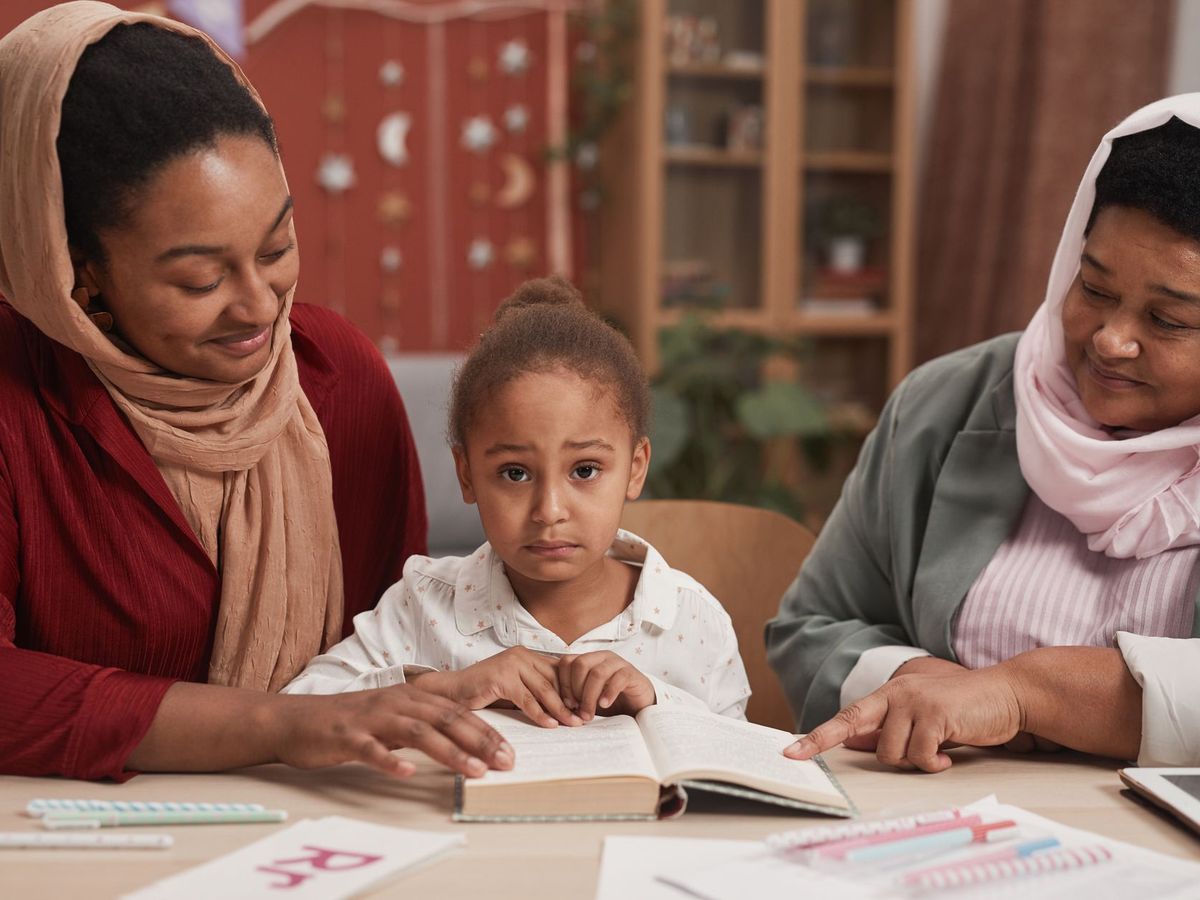
That means you choose what and how your child learns. A Muslim family can put the Quran, Arabic and Islamic studies at the center of the day, alongside English, math and the rest. The Department for Education also publishes guidance for parents on elective home education, last updated on 19 August 2024 and applying to England.
Taking a child out of school in England
If your child is at school now, gov.uk gives this direction: “you should tell the school if you plan to educate them at home. The school must accept if you’re taking your child out completely.”

Here is a simple order of steps:
- Decide and prepare. Think about what you will teach and when. Our guide to how to start homeschooling can help.
- Write to the school. Put the decision in writing, with the date you want your child’s name taken off the school roll. Keep a copy.
- Keep a record. Note the date you sent it and any reply.
- Check the exceptions below before you send it.
The exceptions
These rules are as of November 2026. gov.uk names two cases where the council is involved:
- A special school. “If your child has SEN and attends a special school, you’ll need to get the council’s permission to educate them at home.”
- A school attendance order. gov.uk says permission is needed from the council if your child is under a school attendance order.
If either applies to you, speak to your local authority before you do anything else.
Part-time is different. gov.uk says: “They can refuse if you want to send your child to school some of the time.” So if you want your child to stay at school part of the time, the school can refuse.

The local authority’s role in England
The local authority, usually called the council, does not run your home education. gov.uk says what it can do: “The council can make an ‘informal enquiry’ to check your child is getting a suitable education at home. They can serve a school attendance order if they think your child needs to be taught at school.”
In practice, this means you should keep some record of what your child is learning. Simple evidence is enough to start with: samples of work, a list of books and a short plan for the term. The guidance for parents on gov.uk is the place to check what the council may ask for.
Wales
The Welsh Government says: “In Wales, parents must notify their child’s school in writing if they are withdrawing their child to educate them otherwise than at school (home education). The parent does not need permission from the local authority to deregister their child from school unless the child attends a special school.”
So the first step in Wales is a letter to the school. Read the Welsh Government page for the latest detail, since the rules there are changing (see below).
Scotland
Scotland has its own law and guidance. The Scottish Government published a new Home education guidance on 23 January 2025, with a correction in May 2025. Some points from it:
- “It is the duty of the parent of every school age child to provide their child with education, either by sending the child to school, or by other means.”
- “The choice to provide home education is a legitimate choice, alongside the option of sending a child to school.”
- Parents do not have to give a reason. The guidance says they “do not have to give a reason for choosing home education when requesting to withdraw their child from school,” and it lists “Religious or cultural beliefs” among common reasons.
The process depends on your child’s situation. If your child has been attending a public (council) school, you must ask the local authority’s consent before withdrawing them. The authority must not unreasonably withhold it and should aim to decide within 6 weeks. Consent is not needed to home educate a child who is not on a public school roll. Read section 3 of the guidance before you write to anyone.
The guidance also notes that parents should be clear on the implications of home education, including access to qualifications. Find the full text at gov.scot.
The Children’s Wellbeing and Schools Act 2026
The Children’s Wellbeing and Schools Act 2026 is now law. Part of it deals with “Children not in school” and includes a section on registration. The Welsh Government says the Act received Royal Assent in April 2026, and that when the measures are brought into force in Wales, parents will have to tell their local authority if their child is of compulsory school age and not on roll at a school in Wales.
The Welsh Government page, dated 4 June 2026, describes the measures as coming into force later, after regulations and consultation. We do not give a start date. Rules in this area are changing, so check gov.uk or gov.wales before you act.
When in force, the Act will also require council consent before a child on a child protection plan or under section 47 enquiries can be taken out of school, and schools will check with the council before removing any child from the roll.
GOV.UK opened a consultation on “Children not in school” statutory guidance on 12 November 2026. It closes on 3 February 2027, so check the consultation page for what changes.
Exams and qualifications
Home educated children can sit exams, but not through a school. They can usually sit exams as private candidates at an exam center; check with the center, because the arrangements differ by center and by exam board. Ask the exam centers near you early, because places and dates can be limited. We have not verified the details of any one center, so check directly.
Our guide for teens covers high school years and exam planning.
Finding other Muslim home educating families

Local and online groups are the usual way to meet other families. A few places to look:
- Your local masjid and weekend school. Teachers and parents often know other home educating families.
- Local home education groups in your council area. Many are open to all faiths, and you can ask about their approach to prayer times and halal food.
- Social media groups for Muslim home educators in the UK. Check who runs a group before you join or share details, and be careful about sharing your child’s information.
We have not verified any named group, so we do not list one. See our page on Muslim homeschool co-ops for what to ask a co-op.
Moving between countries or have family abroad? The rules differ again in Canada and Australia.
Islamic studies resources from UK providers
These providers describe themselves on their own websites. We have not tested their materials, so look at samples before you buy.
| Provider | What its website shows |
|---|---|
| Safar Publications | Graded Islamic studies for ages 5 to 11 and 11 and over, Qaidah and Tajweed, Arabic and duas, plus an online platform |
| Ta-Ha Publishers | A UK Islamic publisher since 1980, with children’s and teens’ sections |
| Kube Publishing | Islamic books for adults and children, with children’s books by age band |
| Learning Roots | Islamic books, games and digital products for children, in age bands |
| The Islamic Foundation | A UK charity established in 1973, with titles covering Quran, Sirah and children’s books |
Safar is the closest of these to a full graded course. The others are mainly publishers of books. For more on choosing between them, see Islamic homeschool curriculum.
General information, not legal advice
This page gives general information only and is not legal advice. Laws and guidance change, and your child’s situation may be different from the examples here. Check gov.uk, gov.wales or gov.scot, or contact your local authority, before you act.
Common questions
Is homeschooling legal in the UK?
Yes. gov.uk says you can teach your child at home in England, full or part-time. Wales and Scotland have their own rules, covered below.
Do I need permission to take my child out of school in England?
gov.uk says you should tell the school, and the school must accept if you are taking your child out completely. Council permission is needed if the child attends a special school or is under a school attendance order. If you want your child to stay at school part of the time, the school can refuse.
Do I have to follow the national curriculum?
In England, no. gov.uk says you must make sure your child receives a full-time education from the age of 5, but you do not have to follow the national curriculum.
Do I have to tell the local authority in Wales?
Not at the moment. The Welsh Government says parents are not currently legally required to notify the local authority. You must notify the school in writing, and local authority permission is needed only for a special school. This will change when the Children's Wellbeing and Schools Act measures come into force in Wales.
Is the new register for children not in school in force?
The Children's Wellbeing and Schools Act 2026 provides for a register, but we cannot give you a start date. Check gov.uk for the current position.
- Home education, GOV.UK
- Elective home education: guidance for parents (England), GOV.UK
- Children's Wellbeing and Schools Act 2026, contents, legislation.gov.uk
- Children's Wellbeing and Schools Act 2026 and elective home education, Welsh Government
- Children not in school statutory guidance consultation, GOV.UK
- Home education guidance, Scottish Government (published 23 January 2025)
- Safar Publications
- Ta-Ha Publishers
- Kube Publishing
- Learning Roots
- The Islamic Foundation